
TRENOS SiGINT: The Zespri Paradox Revisited - We Made A Mistake!
- Scott Mathias

- Jun 15
- 2 min read

Republished from PlanetFood.News
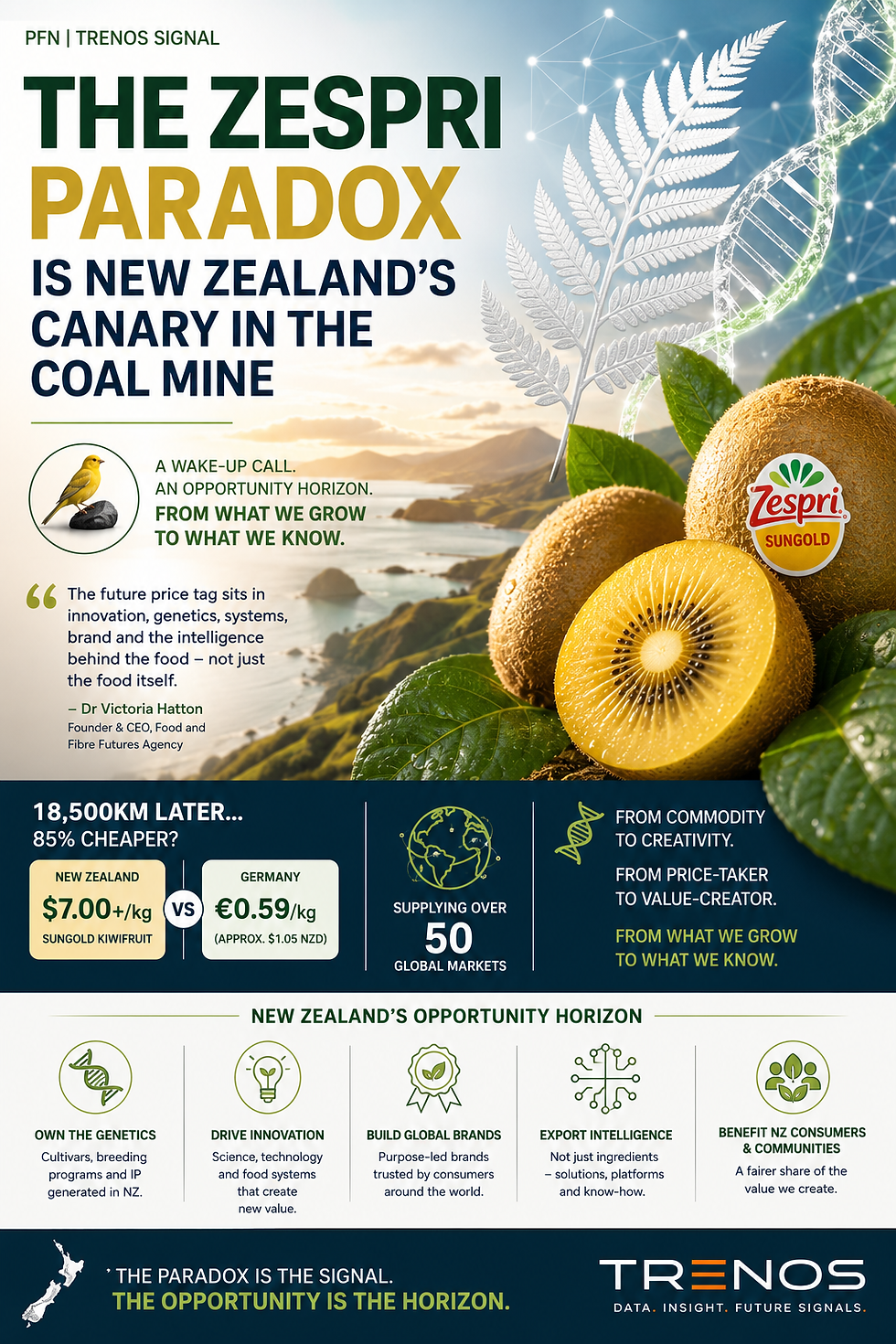
Six days ago we published THIS STORY about the Zespri Paradox - it was wrong for one small but embarrassingly point and as is sometimes inconvenient in journalism - the fact got in the way of a good story.
We were examining the gap between what New Zealand producers and what consumers ultimately pay for food around the world.
Following publication, an eminent reader - Dr Hans Maurer - pointed out an error between his personal supermarket image and the background info we used from Germany that formed part of the discussion.
The image appeared to show New Zealand kiwifruit selling for €0.59 per kilogram. On closer inspection of the fine print, the pricing was actually €0.59 per fruit, not per kilogram.
It was an honest mistake and one we are pleased to correct.
When converted to a kilogram equivalent, the German retail price works out at approximately NZ$12–13 per kilogram, depending on fruit size. That paints a very different picture from the original interpretation and demonstrates the importance of carefully checking retail pricing labels, particularly in overseas markets where pricing conventions can differ.
However, while the specific pricing example was incorrect, the broader issue explored in the article remains relevant.
Consumers purchasing food in overseas markets are not simply paying for the product itself. Between the orchard and the supermarket shelf sits a complex value chain that includes harvesting, packing, cool storage, shipping, customs clearance, wholesale distribution, retailer margins, marketing and local taxes. Each stage adds cost and value.
The same principle can be seen across many of New Zealand's major food exports.
Recent comparisons of butter and cheese prices show that European consumers are often paying prices similar to, and sometimes higher than, those paid by New Zealand consumers. A kilogram of butter in parts of Europe can retail for the equivalent of NZ$18–30 per kilogram, comparable to prices found in New Zealand supermarkets. Cheese pricing shows a similar pattern, particularly for premium and specialty products.
Yet this raises another important question.
Why are New Zealand consumers paying such high prices for products produced in one of the world's most efficient food-producing nations?
Whether it is kiwifruit, butter, cheese, meat or seafood, many New Zealand households continue to feel pressure from food costs despite living in a country renowned for agricultural productivity and export success.
The original article sought to explore where value is created, captured and retained throughout the food system. That question remains just as relevant today.
As New Zealand considers its future food economy, the discussion should perhaps focus less on isolated shelf prices and more on how much of the final consumer dollar remains within New Zealand communities, businesses and supply chains.
The clarification changes the detail, but it shouldn't change the conversation.
Thanks Dr Maurer and the quote in our original article from Dr Victoria Hatton still remains relevant to the conversation.
Thank you.
ENDS:


Comments