
TRENOS SiGINT: Italy’s 3D-Printed Plant-Cell Foods

Analyst: Scott Mathias - December 2025
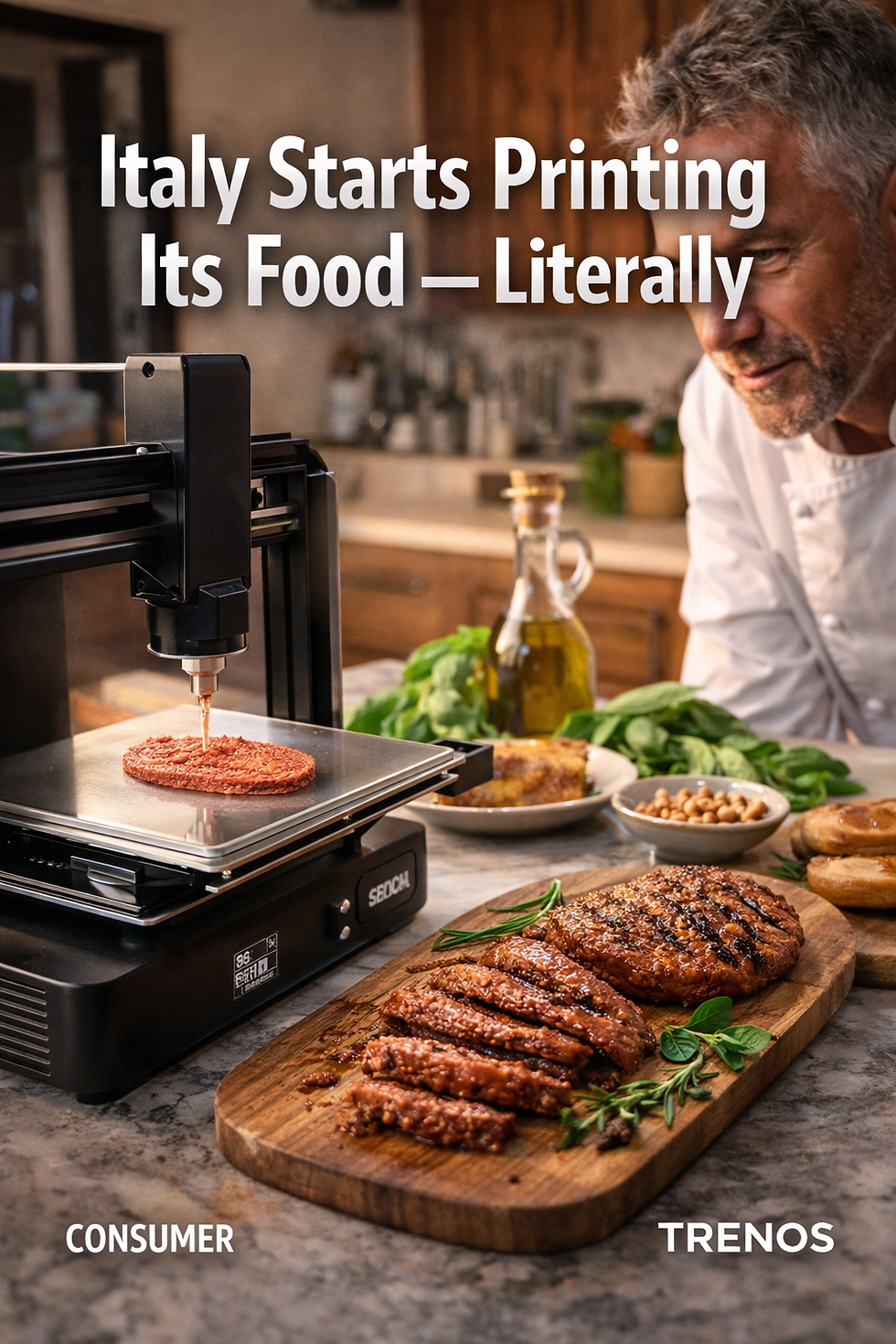
Signal:
Italy is emerging as an unlikely leader in applied food fabrication. ENEA’s work at EltHub combines plant cell culture with 3D printing to precisely control food structure, from mouthfeel to sliceability, without relying on heavy industrial additives. The technology is already moving beyond R&D, with Rome-based restaurant Impact Food demonstrating real-world culinary use.
Human Factor
For diners, this isn’t about choosing “tech food”, it’s about choice, inclusion, and experience. For people with dietary restrictions, chewing difficulties, or protein needs that traditional formats don’t serve well, structured plant-cell foods offer dignity without compromise. Italy’s willingness to trial this tech in a restaurant setting signals cultural acceptance matters as much as innovation.
TRENOS Metrics Snapshot
Field | Signal |
Signal | Plant-cell food fabrication |
Data Point | ENEA EltHub + Impact Food (Rome) |
TikTok Views | Low (early-stage) |
Retail Footprint | Foodservice |
Ingredient Format | Cultured plant cells |
Product Range | Sliced foods, steak-style cuts |
Consumer Segment | Flexitarian, medical, ageing |
Brand Origin | Italy |
Export Status | Pilot stage |
Trend Classification | Novel Processing |
System Pressure Point | Texture, accessibility |
Momentum | Building |
Sentiment | Curious, cautiously positive |
Where Signal Is Loudest | Italy, EU research hubs |
Related Links |
Long Play Analysis - Italy’s 3D-Printed Plant-Cell Foods
This shift isn’t about replacing Italian food, it’s about re-engineering structure where tradition struggles. As populations age and dietary needs fragment, food design becomes as critical as flavour. Italy’s early experiments suggest the future of food may depend less on what ingredients we use, and more on how intelligently we assemble them.
ENDS:


Comments